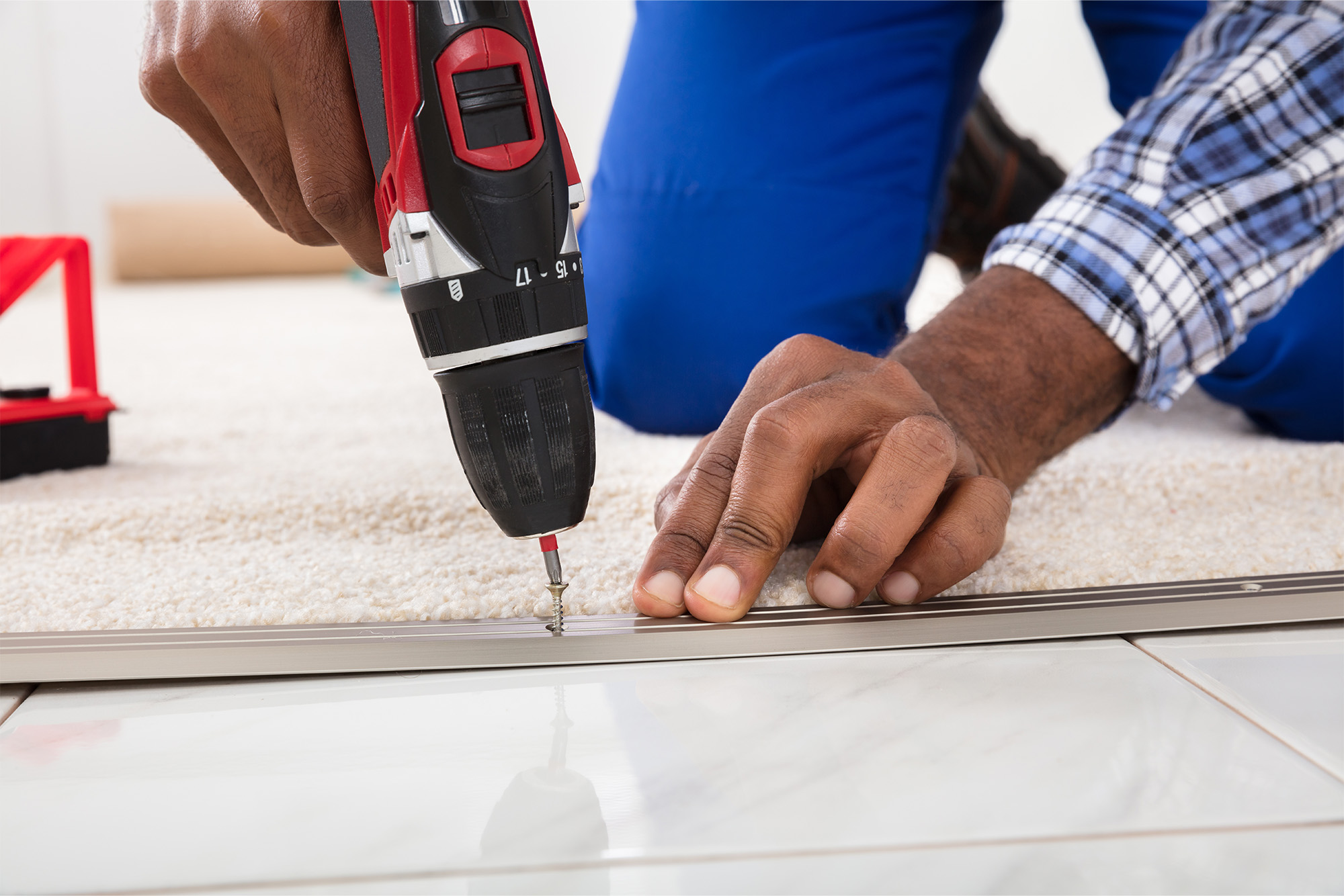
Older Tucson homes often have more flooring history than people realize. A room may have original concrete, old tile, newer carpet, patching compound, previous adhesive, or several remodel decisions layered into the same floor plan. When tile meets carpet in that kind of home, the transition is not just a finishing detail. It is a small construction problem that needs to be solved properly.
A good tile-to-carpet transition should feel smooth underfoot, look intentional, protect both materials, and reduce trip hazards. A bad one does the opposite. It creates a raised edge, exposed carpet backing, cracked grout near the doorway, loose tack strip, or a metal strip that looks like an afterthought. The fix starts with understanding why the height difference exists in the first place.
Why older homes often have uneven floor heights
Many older homes have been updated room by room over time. One owner may have added tile in the hallway, another may have replaced bedroom carpet, and someone else may have installed new underlayment without removing older material underneath. Even a small difference in tile thickness, thinset depth, carpet pad thickness, or slab flatness can create a noticeable height change at the doorway.
Tile is usually a more fixed surface because it is bonded to the substrate. Carpet is softer and compresses underfoot. That means two floors that look close in height when installed may feel different after daily use. Carpet pile and padding can settle, while tile stays firm. This is why transition planning should happen before installation, not after the installer reaches the doorway.
The right transition depends on the height difference
There is no single trim piece that solves every tile-to-carpet transition. If the floors are close in height, a simple metal or vinyl carpet edge may be enough to tuck and secure the carpet cleanly against the tile. If the tile is higher than the carpet, a reducer may be needed to create a gradual slope instead of an abrupt edge.
For larger height differences, the installer may need to adjust the carpet side with pad selection, ramping compound, or a more suitable transition profile. The goal is not to hide the problem with the thickest strip available. The goal is to make the change in height feel natural, safe, and durable. A transition that looks bulky can be just as distracting as one that is too thin.
Tack strip placement matters more than most homeowners think
Carpet does not simply stop at tile. It has to be stretched, held, trimmed, and tucked correctly. The tack strip should be positioned so the carpet can be secured without leaving a loose edge or creating too much pressure against the tile. If the tack strip is too close, the carpet may not tuck cleanly. If it is too far away, the carpet edge can feel soft or unstable.
This detail becomes even more important in doorways and hallway openings where people step in the same spot every day. A poorly secured carpet edge can fray, lift, or pull away from the transition. In homes with pets, wheelchairs, walkers, or frequent guest traffic, that weak edge can become a daily annoyance and a safety concern.
Tile edges need protection too
The carpet side is only half the story. The tile edge also needs to be protected, especially if the tile has a cut edge near the doorway. Exposed tile edges can chip over time when hit by shoes, vacuums, furniture legs, or rolling items. If grout is placed too aggressively against a moving carpet edge, it can crack or crumble.
A clean transition should respect both flooring materials. In some cases, that means using a profile that covers and protects the tile edge. In others, it means planning the tile layout so the cut line lands in a sensible place. This is one reason doorway transitions should not be treated as an afterthought. The best result is usually built into the installation plan from the start.
Safety and appearance should be solved together
Some homeowners focus only on making the transition look seamless. Others focus only on reducing the trip edge. The best solution does both. A smooth transition should match the flooring colors, suit the age and style of the home, and be easy to cross without noticing the height change too much.
In Tucson homes, this can be especially important where tile runs through main living areas and carpet remains in bedrooms. The transition is often visible from the hallway, so the wrong metal color, profile height, or placement can make a good flooring project look unfinished. A properly chosen reducer or carpet trim gives the doorway a cleaner, calmer finish.
Tile-to-carpet transitions in older Tucson homes need more thought than a simple strip at the doorway. Floor height, carpet compression, tile thickness, tack strip placement, edge protection, and safety all affect the final result. When these details are planned correctly, the transition feels smoother, lasts longer, and looks like part of the floor instead of a patch.
Visit Complete Flooring at Tucson, AZ to compare tile, carpet, transition profiles, trims, and installation options in person. We serve Tucson, Oro Valley, Marana, Saddlebrook, and Green Valley, AZ and can help you choose flooring details that work with the age, layout, and real conditions of your home. Contact us when you are ready to plan a cleaner, safer tile-to-carpet transition with a team that understands the small details that make the whole floor feel finished.