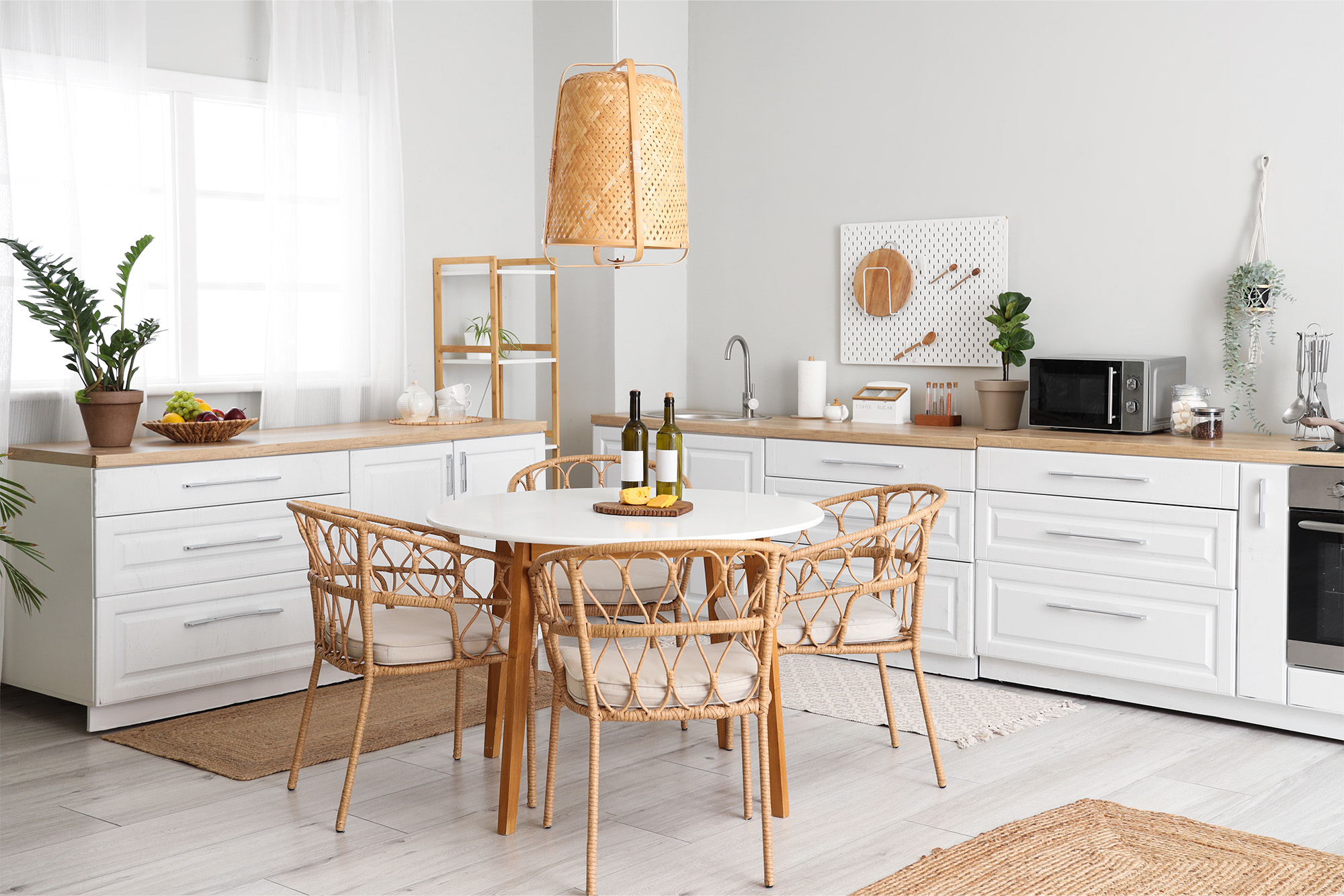
Laminate flooring has improved significantly, but not every product is built to handle the same level of traffic, cleaning, heat exposure, or daily wear. For Tucson homeowners, that matters. Dry climate, tracked-in grit, direct sun, and active households all put pressure on a floor in different ways.
That is why choosing laminate should go beyond color and plank width. At Complete Flooring, we help customers compare laminate by looking at the construction details that actually affect durability and performance.
Start with the AC rating
One of the first technical specs to review is the AC rating, which measures abrasion resistance of the wear layer. This is a useful benchmark for how well the product handles foot traffic and surface wear.
What the rating means
For most residential settings, AC3 is considered standard, while AC4 generally offers stronger performance for heavier traffic. AC5 is often more than necessary for many homes, but it can make sense in very active households or certain light commercial applications.
What to choose in Tucson
For main living areas, hallways, and busy family spaces, AC4 is often a solid target. In lower-traffic bedrooms or guest rooms, AC3 may still be appropriate if the rest of the product construction is good.
Check the core density, not just the thickness
Many buyers assume thicker laminate always means better laminate. That is not automatically true. Core density often matters more than raw thickness because it affects stability, lock strength, and resistance to impact.
A denser core usually helps with:
better locking system performance
reduced flex underfoot
improved resistance to edge damage
a more solid feel when installed correctly
An 8 mm product with a stronger core can outperform a lower-quality 12 mm board. Thickness still matters, but it should be judged together with overall construction quality.
Look closely at edge protection
In kitchens, entries, and everyday living spaces, the board edges are often the most vulnerable part of laminate. That makes edge sealing and waxed-edge systems worth paying attention to.
Why waxed edges matter
Waxed or treated edges can help reduce moisture intrusion at the joints. They do not make a floor waterproof in every real-world scenario, but they can improve short-term spill resistance and reduce the chance of immediate edge swelling.
Why edge profile matters
Micro-beveled edges can look more realistic, but they also create tiny channels where dust may collect. That is not always a problem, but it is something to consider in homes where easy cleaning is a top priority.
Understand water resistance vs waterproof claims
This is one of the biggest buying traps. Some laminate products are water-resistant for a limited period. Others are marketed as waterproof. Those terms are not interchangeable, and the fine print matters.
A good buyer question is not just “Is it waterproof?” It is:
how long can spills sit before damage risk increases
what part of the plank is protected
what voids the warranty
whether the locking system is designed to resist top-down moisture
For Tucson homes, laminate can work very well in dry living spaces and bedrooms. In kitchens, it can still be a good option if the product is strong and spills are cleaned promptly. In bathrooms or consistently wet zones, tile is still usually the safer flooring specification.
Review the underlayment and installation conditions
Even a strong laminate product can perform poorly if the slab is not prepared properly. Installation quality matters just as much as product selection.
Important checkpoints include:
Slab flatness
Uneven substrate can stress the locking system and create movement, hollow sounds, or premature wear.
Moisture testing
Even in a dry climate, slab moisture testing should not be skipped. Product warranties often depend on following moisture guidelines.
Expansion space
Laminate needs room to move. Expansion gaps at walls, fixed objects, and transitions are essential, especially in spaces with temperature swings or sun exposure.
Don’t ignore sunlight and room placement
Strong direct sunlight can affect surface temperature and long-term appearance. In bright Tucson rooms with large windows or sliders, it is smart to ask about UV stability, room layout, and whether window treatments are part of the plan.
Laminate often performs best in:
bedrooms
living rooms
home offices
guest rooms
dry interior zones without repeated standing moisture
If you want laminate that looks good and holds up, the right choice comes down to more than style. Complete Flooring can help you compare AC ratings, board construction, edge protection, water resistance, and installation requirements so you buy with confidence. We serve homeowners across Tucson, Oro Valley, Marana, Saddlebrook, and Green Valley, AZ, and you can visit Tucson, AZ to see laminate options in person and talk through the best fit for your rooms and lifestyle. Contact us today to get expert guidance, request an estimate, and choose laminate built for real Tucson living.