Why Slab Movement Matters for Tucson Tile
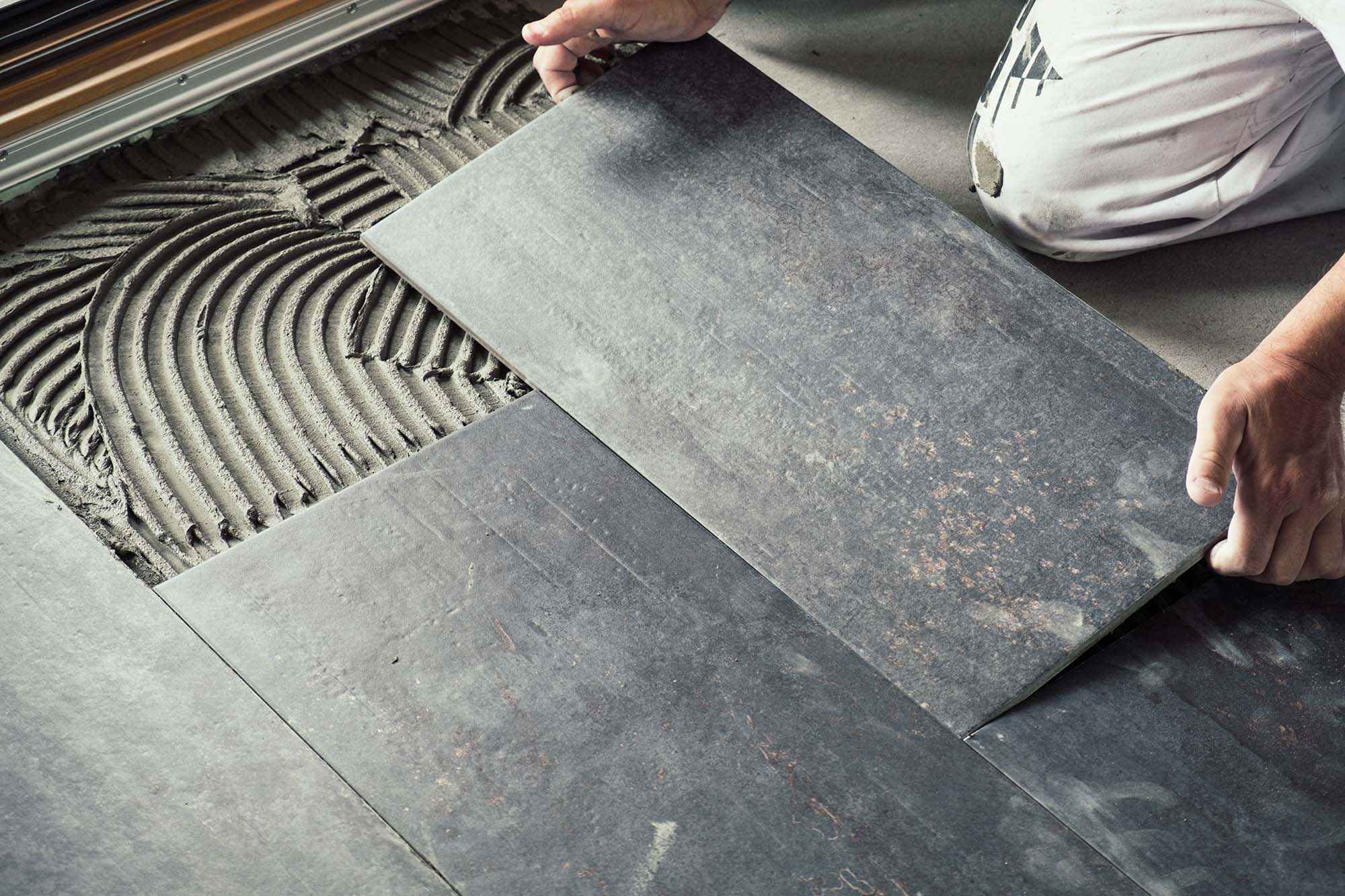
Concrete slabs are not perfectly static. They expand and contract slightly with temperature changes, and Tucson's soil conditions and seasonal swings between dry heat and monsoon moisture can add subtle shifts over time. Tile itself is rigid, so however the slab moves, the tile and grout have to absorb that movement somewhere.
This is why the same tile can perform beautifully in one home and develop hairline grout cracks in another. It usually is not the tile that fails first, it is how much movement the joint between tiles is asked to accommodate.
What Counts as Large Format Tile
In the flooring industry, large format generally refers to tile with at least one side measuring 15 inches or longer, with popular sizes running up to 24x48 inches or larger for certain porcelain lines. Standard tile typically falls in the 12x12 to 12x24 range, which has been the go-to size in Tucson homes for years.
The size difference matters structurally because fewer, larger tiles mean fewer grout joints across the same floor area. Grout joints are actually where a tiled floor absorbs movement, so the number and spacing of those joints plays a bigger role in performance than most homeowners expect.
How Tile Size Changes Grout Line Behavior
With standard size tile, more grout joints are spread across the floor, which means each individual joint absorbs a smaller share of the slab's movement. This distributes stress more evenly, which is one reason standard tile has such a long track record on slab foundations.
Large format tile has fewer joints covering the same square footage, so each remaining joint has to flex more to accommodate the same total movement. This does not make large format tile a poor choice, but it does mean proper substrate prep and a flexible grout or movement joint matter more than they would with a smaller tile.
What Actually Causes Tile Cracking on a Slab
In most cases, cracking traces back to installation prep rather than the tile size itself. An uneven substrate, a missing crack isolation membrane over a control joint, or grout that is too rigid for the amount of movement present are the usual culprits, regardless of whether the tile is 12x12 or 24x48.
Large format tile simply has less margin for error in this area, since there are fewer joints to distribute any prep shortcuts across. A slab that has been properly leveled and, where needed, fitted with a crack isolation membrane can support either size well.
Where Each Size Tends to Work Best
Large format tile is popular for open living areas and kitchens where homeowners want a clean, seamless look with minimal visual interruption. Standard size tile continues to be a strong, dependable choice for smaller rooms, high-traffic hallways, and bathrooms where its shorter spans and closer grout spacing offer a bit more built-in flexibility.
Neither size is the automatically correct answer for every room. The right choice comes down to the specific space, the condition of the substrate underneath it, and the look you are trying to achieve, which is exactly the kind of thing worth walking through before you commit to a size.
Tile size is only one part of a slab movement conversation. Substrate condition, grout selection, and where control joints fall in your home all play a role in how a floor performs over the long run.
Complete Flooring serves homeowners across Tucson, Oro Valley, Marana, Saddlebrook, and Green Valley, AZ and can evaluate your specific slab before recommending a tile size and installation approach. Visit Tucson, AZ to see large format and standard size tile flooring side by side, or contact us to schedule a walkthrough of your space.